Thursday, May 24, 2012

Thursday Thoughts: Waiting


So much of life is spent waiting for one thing or another.  Waiting for the light to change.  Waiting for a riding partner to show up.  Waiting to see if the weather will clear.  Waiting for that motorist (the one who just forced a pass around you!) to get out of the way!  Waiting for the money to accumulate so you can buy those new parts.  Waiting for those new parts to come in.  Waiting for the Big Ride.

Sometimes the waiting is active.  How many of us have spent time on the bike, pedaling under less than ideal conditions, just waiting for it to be over?  Waiting for the work day to end so the riding can begin.

Waiting for good news.  Waiting for bad news.  Waiting for the end of this long watch.  Waiting for the dawn.

I’ve experienced that last one.  Long rides through the night, sleep deprived, chilly, bone-weary, waiting for the first grey hint of dawn.  Hanging on and pressing the pedals robotically, knowing that, with the rising of the Sun, conditions would improve, the new day would bring better things.

Waiting for the new bike to arrive.  That’s a delicious kind of wait.  When you know that the thing is coming.  It’s that “night before Christmas” kind of feeling.

Standing with the bike, waiting for the ride to start.

What goes through your mind when you are waiting?  What do you wait for?


Wednesday, May 23, 2012

Songs


Every once in a while I see something in one of the bicycle mags that is supposed to be witty or profound.  Usually it’s a question along the lines of,  “What does your bike say to you?”

My bikes don’t talk.  They do communicate, and I do listen.  They each have names.  I don’t often share those names with others.  The names all arise from charateristics of the bike.  Over time, each machine seems to suggest some connection or quality the evokes a name.

My bikes don’t talk to me.  They sing.  Each bike has a song.  Perhaps it would be more correct to state that each bike is a song.

There’s a soprano, who is higly cantankerous, but well worth the efforts.  I have one terrific, low-maintenance bass.  There’s a couple of altos.  (An alto is a soprano who can read music.)  There are a couple of baritones, steady and of good wind.  There’s even one who doesn’t sing much, but rather plays a mean percussion section.  (Polyrhythm of course!)

Why do you think we call it a “tune up”?

Tuesday, May 22, 2012

Utility Cycling 101: Refinements


Carrying “Stuff” Part IV:  Bike Choices and…  Fenders?

You can run your errands (and commute) on just about any kind of bike.  It’s true!  That premise was behind last week’s article in this series.  With a back pack, or a messenger bag, just about any functional bike can be a “utility bike.”

That said, there is an argument for going a bit farther.

Happy is the cyclist who has two bicycles!  One can be the fast and sexy ride that is saved for events, races, the big group rides.  The other, in addition to being the utility bike, is a stellar “backup.”  It’s the bike you ride on rainy days.  It’s the bike you jump on to go to the store.  It’s the rig that is available, while you are having your event bike prepped in the shop, prior to that really really important race.

I know a lot of you don’t engage in any kind of racing, but most of you do have important dates, ones which require that your bike be ready.  At the same time, you don’t want to part with the bike to have maintenance and service performed when you are at the peak of your riding time.  Having a “backup bike” works well.  If that bike serves duty as your “utility bike” so much the better.

So just what constitutes a “utility bike”?

Actually, your errand/commuter could be almost anything.  The primary criteria are that it be comfortable and that it permits you to haul stuff.  The bike could be a cruiser, a mountain bike, hybrid, road bike, single speed, fixie, or even a BMX bike.  It should meet the following criteria
·     comfortable for you to ride over the distances involved
·     reliable
·     sturdy
·     Economical to purchase and maintain

In addition, I’d suggest that you look for some (or all) of the following:
·     More clearance for a bit wider tires
·     Ample room for fenders
·     Eyelets of brazons for fenders, racks, and accessories

Yes, we mentioned fenders and racks.  If you are going farther, or hauling more stuff, a rear rack and panniers may just be part of your solution.

If you go to the Audax Riders blog HERE you will see one utility/commuter setup.  This was a relatively inexpensive build/conversion.  It’s one way to accomplish my particular goals.  Others have other priorities, and can make other choices.  But please note, it doesn’t matter that this bike is a bit heavier, when I ride it I’m more interested in carry-capacity and comfort.  (NOTE:  If training is one of the goals, it really doesn’t matter how fast one is going, rather quality of effort and duration are the key criteria.)

One last word on fenders:  Fenders are sometimes considered “geeky,” or uncool.  Would someone tell me what’s cool about not riding?  Or about staying clean and dry?  I’m going to assume that just about everyone has been caught out in the rain a time or two.  Did you ever notice, your shoes saturate and soak first?  And shoes are quickly followed by the back of the the shorts, and then the top of the jersey front.  Hmm.  Could it be that these locations, which are subjected to the rain and the splash from rotating tires are getting soak-through because of that added splash?

Fenders keep the road grime and splash off of the rider.  That decreases the amount of dirt that is sloshed against shoes and clothing.  Clean clothes resist soaking longer.  In short, fenders keep you cleaner and drier.  Fenders are sort of like helmets.  They have to be on the bike at all times in order to insure that they are present when needed.


Next Week:  Hauling Stuff ~ One More Suggestion

Monday, May 21, 2012

Ride Report: Audax 200K


What can be said about these Audax 200K rides?  They are long?  Yes they are.  They are demanding.  Uh…  Well, yes.  Obviously there is some kind of reward to be had from them.  People come back and repeat participation, some year after year.

Another thing could be said.  It takes a leap of faith to do this ride for the first time.  Nobody really knows what to expect from a ride like this, not until they have done it.  For seasoned veterans of this kind of riding, these rides are still a challenge.  But the practiced endurance rider at least knows what to expect.  For a first timer, these things are, to some extent, a voyage into the unknown.  It takes courage to make the attempt.

We were blessed with spectacular weather.  The day dawned a bit on the cool side, and warmed slowly.  (I was in arm-warmers for the first 50 miles.)  It warmed nicely as the day progressed, but temps never got up into the unpleasantly hot range.  The skies were blue, with wisps of clouds.  We were graced with breezes to cool us during the hottest part of the day.  And even the evening thunderstorm was kind enough to wait until we had finished riding.  Perfect!

Present at the beginning were Jan Oden, Deborah Tyler, Amy Hill, Dan Christensen, Scott Rutkowski, Ken Finlon, and your humble correspondent.  Each and every rider acquitted themselves in fine style.  Six of the seven rode the complete route.  Amy was feeling a bit of time pressure late in the day, and withdrew, in good order to scurry home.  I might add, she was riding strongly, and left us to complete her day with about 105 miles.  She did the last 25 of her day in just a touch over an hour.  Good job Amy!

The Olympic Moto is Citius, Altius, Fortius.  The Latin translates to “Faster, Higher, Stronger.”  Many cyclists, and other endurance athletes keep track of “personal best” performances.  It is gratifying to report that three of our riders managed to achieve new personal records in three categories each.  Ken, Jan, and Deborah all climbed higher, rode farther, and hit greater speeds than they had ever done before.  Bravo!

Lunch was incredible, and deeply appreciated.  The afternoon was simply a good long ride, with building fatigue, but plenty of rewards too.  I’m happy to report that the more experience riders among us chose to ride in support of the newer folk.  This adds greatly to the spirit of the day.  In short, a good time was had by all.

“Official” stats:  124.3 miles in 9:27.  (Taken from my GPS device.)  The distance is just a little short of the target 125, but is exactly equal to 200 kilometers.

Bon route et Bon Chance!

Wednesday, May 16, 2012

Visualizing the Audax 200K


Outbound:
It’s early, just after 7:00 A.M.  Dawn has only recently broken.  It’s cool out.  You are wondering if you should wear that jacket.  You know you’ll be out of it before noon, and if you wear it now, you’ll carry it all day.

There are other cars and trucks beginning to pull into the parking lot.  You check your tires and pump them up one last time.  The activity helps to warm you up.  You make your decision about extra clothing.  You’ll leave the jacket behind.  You can wear your rain jacket.  It will serve as a wind jacket for the first leg of the ride, warm enough.  You can pack it away at the first stop.

Water bottles in cages.  A last check of the snack food you’ve brought, your spare tubes, sunscreen, and the supplies you will carry.  It’s time to go and join the other riders, time for a last minute briefing, and time to go.

The first crank strokes of a big ride are always a bit slow and hesitant.  This will be a long day, no need to rush it at the beginning.  The group forms and eases out onto the Parkway.  As we roll southward, the sun is rising to the side.  There are welcome warm spots along the misty roadway.  The town is mostly quiet, and traffic is scant.  The ride through the town is calm and steady.

The first challenge comes just after the edge of town.  The Sun is rising to your left, but it doesn’t reach here yet.  The big hills into Senoia are ahead.  The group slows a bit, and you calm into the effort.  The hills leading into Senoia are legendary, but you quickly realize they are over-rated too.  Sure, you’re a little breathless as you roll into the town, and your legs felt a bit of a burn, but you aren’t tired, and sting is fading already.  It’s nice to just cruise Main Street, breathing easily.

A quick “jink” across the tracks, and you are heading out of town.  Your legs are warming up nicely as you make the turn onto Dolly Nixon.  It’s rollers from here to the turn onto GA-85, but nothing you can’t handle.

As the group approaches the highway, the interval closes.  The first rollers of the day are behind, the Sun is well up, and it’s time to motor!

This is an important section.  The relative “flats” on the highway permit some good speed, but the group needs to maintain discipline.  If we go out too hard, this early in the day, we’ll pay a price later.  At the same time, it’s good to stretch it out and make some time.
~~//~~

The long stretch of rollers is behind you.  The first Break Point is coming up.  (And about time too!)  It’s time to get off the bike and stretch, fill bottles, eat a small snack, attend to nature’s call.  The day is warming nicely, and you pack your jacket away.  (You won’t unpack it again, unless it rains.)  This is a short stop, so you hustle through things.  It’s time to apply a good coat of sunscreen, and get ready to ride again.  It was good to make 33 miles so early in the day.

After the break, you climb with the group, up into Greenville.  A quick pass around the square, an you’re in roller country again.  But this is a relatively short stretch of rolling terrain.  At the fables (and non-existent) Johnson City, you will make a turn away from GA-85.  This is another relatively fast section of the route.  You’ll be following the CSX trackline for a bit, and the road flattens out.  Time to establish a good steady rhythm ride and make solid good time.  At the end of this stretch you will do the fabled “triple climb” into the town of Pine Mountain.

Here is where, if you haven’t done this ride before, the anxiety really builds.  You leave a short break in the town and turn onto GA-354 for the climb up the side of Pine Mountain.

At first the “climb” doesn’t seem like much.  It’s mostly flat,and then tilts up a little.  Then the road gradually increases grade.  “Hey!”  you think,  “This isn’t so bad at all!”  And it’s not.  The climb doesn’t really get steep until the last quarter mile before the intersection with GA-190.  You make the exit and overpass turn, and you are on the spine of the mountain.  Almost immediately, you are faced with more grade, but it isn’t too severe, just long.  But you’ve done worse in your training.  You take it in stride.

You quickly find that riding the spine of the “mountain,” is more like a progression of really big “rollers.”  You grind upwards for about a mile at a time, ride along the top with alternating spectacular vistas, and then do a booming half mile to mile descent.  Repeat four or six times and you are at the intersection with GA-85A.  Wow!  The toughest part of the ride is done!  Nothing but a long (and fast) descent into Warm Springs, and then you get to rest and eat lunch.  And you will be ready for that!

Lunch is the best food you have ever had!  Everything tastes amazing, and wonderful.  You didn’t think you could eat “sit down, restaurant food” in the middle of a ride, but it turns out that it’s just exactly what you always wanted to do!  After you finish, you sit for a few minutes on the porch, letting lunch settle, and just enjoying the day.  Someone says,  “I could stay here all day.”  You agree.  And, even though all the riders say things like,  “I’m not sure I can get back on the bike,” you all do.

The Trip Home:
The pace is controlled for the next hour.  Nobody needs to work hard with a heavy meal in their bellies.  Thankfully, the first five miles are mostly down hill.  GA-85A is long gentle rollers from Warm Springs to Woodbury.  At Woodbury, the route joins GA-85/74, for more rollers heading back to the north.  You notice an odd thing.  You can see a long way ahead.  As you crest one hill, you can see the road dropping, nad rising in the distance.  It looks like an enormous hill!  Yet, as you ride it, it is neither so steep, nor high.  It’s a trick of the eye.  The distance foreshortens the hill.  You see it all, but it’s a lot less steep than it looks.  Good!

About seven miles after Woodbury, the group enters Gay, Georgia.  No one jokes about the town’s name.  This is the first of the post-lunch breaks.  It will be a short one, just enough to refill bottles and stretch.

After Gay, the route departs from the highway, and turns onto Flat Shoals Road.  There is a long gentle descent to the open span bridge across the Flint River’s wide, flat rocky bottom.  Then there is a long “step climb” toward Concord.  Along this stretch you look to your right and you can see Pine Mountain stretching out across the horizon in the distance.  You’ve been there.  And you are already this far away.  Neat!

At Concord the route turns again, and you travel through semi-rural country, horse farms, and orchards are the main features.  The road is less hilly here, not flat, but less hilly.  Hollonville comes and goes.  Thirteen miles after Concord, you arrive at Digby.

Digby is the last planned en route break point.  It’s only 25 miles to home from here.  There are no big climbs left.  The route will be more gentle, and you know you can do the rest of this ride with no serious troubles.  The mood is light and happy.  Riders fill bottles, stretch, attend to needs, and form up in the parking area, ready to finish this thing.

There is only one more obstacle of any note.  The construction on Bernhard Road is forcing a change of routing near the end.  The choice is simple.  Either you are going to see a bit more traffic, on a heavily traveled highway, or you will be faced with the return trip up the climbs on Ebinezer Church Rd.  Which will it be?

The last major challenge is behind you.  The group is re-entering Peachtree City.  The leader forms the group into a double line, on the south Peachtree Parkway.  You are occupying one full lane, and proceeding in formation.  It’s only three miles to the end of the ride.  You are tired, but jubilant.  This is no longer a ride, but a procession.

The last intersection is reached, and passed.  You turn into the parking lot.  Shouts and cheers!  You have just ridden 125 miles!  And now…  NOW!  It’s time to get out of your riding clothing, eat a delicious post ride snack of sandwiches and sodas, swap stories, and go home.  How do you feel?

Tuesday, May 15, 2012

Utility Cycling 101: Refinements


Carrying “Stuff” Part III:  Messenger Bags

NOTE:  Due to some technical constraints, I am not able to embed photos inside of this email article.  You should be able to see the photos in attachments.  If not, wait until next week, and they will apppear in the body of this article, in the Audax Riders blog Tuesday Post.

One might ask why I would be doing this.  Why should we devote time to messenger bags?  We’ve already mentioned that, for general light errand running a back pack is likely to be sufficient.  But soon the question arises, “What if I want to carry more stuff, or bulkier items?”  There are three parts to the answer.

Of course the messenger bag is not the only way to solve this problem.  But it is a very good solution to a wide variety of problems.
  1. Messenger bags were designed to enable bike couriers to carry lots of stuff, or very bulky stuff, and do so safely.
  2. A messenger bag will work on any bike, and requires no special modifications to the bicycle.


Messenger bags have the floowing design features:
  • Allow comfortable (mostly) load carry
  • Increased safety
  • A stable carry capacity
  • They permit the rider to turn head and scan the world easily
  • They carry the weight low on the back, assisting in stability
  • The primary load strap is wide, and usually well padded, distributing the weight
  • Highly weather resistant, so load items tend to stay dry
  • No modification to bike required, so they can be used with any bike
  • Available in a variety of sizes, and features
  • Many come in either left-hand or right-hand configuration
  • Ease of loading and unloading
  • Surprising ease of carry when off the bike
  •  

Expect to spend between $100 and $300 on a good bag.  The variables are
  1. Who manufactures it
  2. How big it is
  3. What features are included


In the attached pictures:
First you see a messenger bag by Chrome.  The blue scale is included for reference.  It’s 14 inches long.

Second is the same bag opened.  Here you can see the inner vinyl liner, as well as details of the smaller pockets.
Lots of "stuff" capacity, and good organiztion (multiple pockets)

Third shot shows details of the load strap and stabilizer strap.  A nice feature here is that the stabilizer and closure straps have high reflective material woven into them.
Note the hefty buckle.  Also the load strap has a velcro panel allowing attachment of accessories such as a phone holster, utility tool pouch, or small external bag.

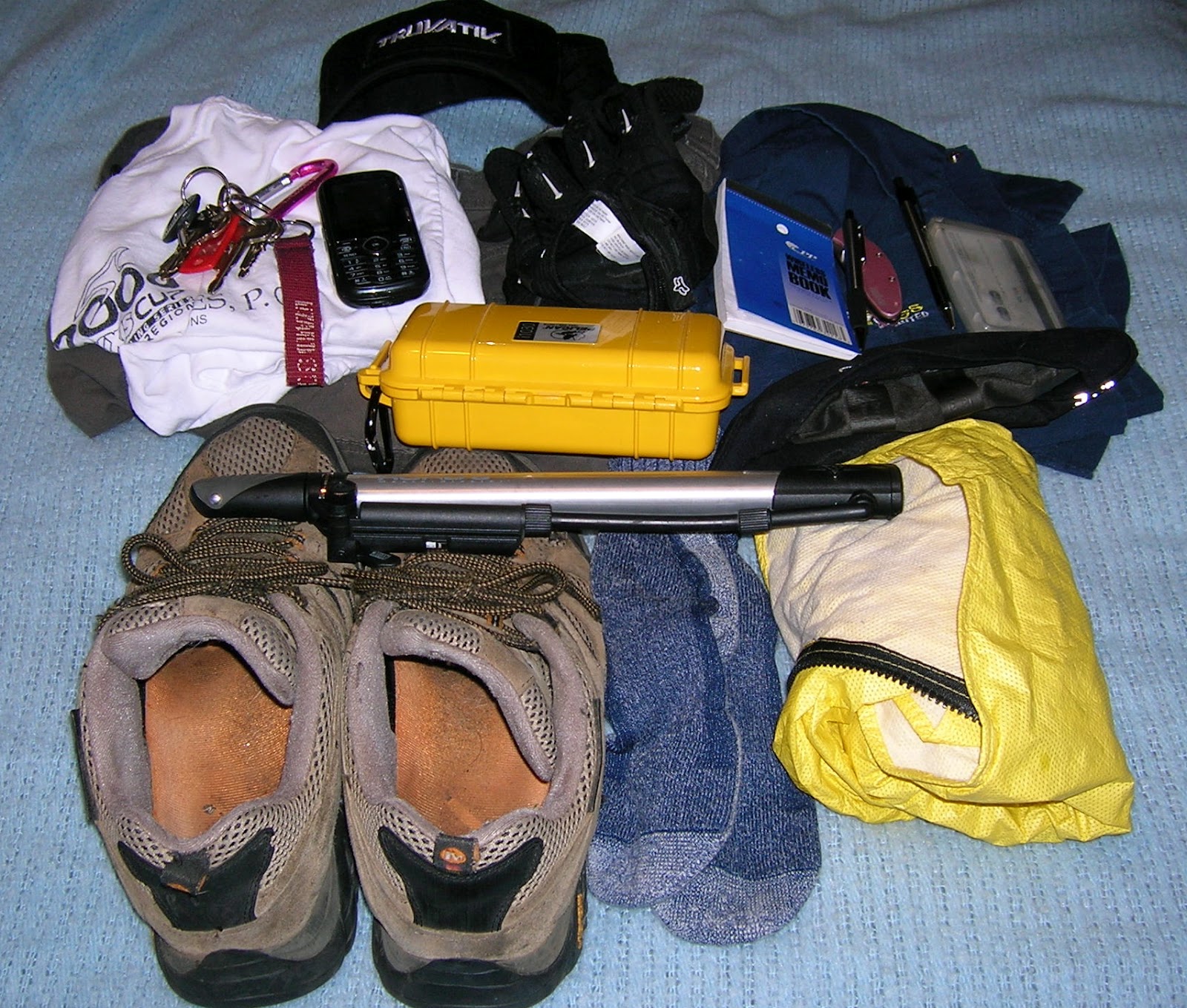
Next picture shows a typical load.  That’s a full day’s clothing (and those shoes are size 14!), rain gear, multi-tool, pump, Waterproof iPod case, notebook, pens, spare hat, and backup gloves.  And yes, it will hold more.
Still room for lunch and sundries!

The last few pictures show some of the features in use, and demonstrate the way the bag is worn. 

Not the carabiner with keys attached to the buckle hardware.  The smaller strap with the reflective "piping" is the stabilzer.  It keeps the bag from shifting while riding)

Standing, off the bike.  Easy carry for modest to moderate loads

Load distributed over the back

Releasing the load strap for easy access  (the stabilizer strap is already released here)

Ready for easy "on the fly" access

Don't have to remove the bag to get at items inside

"Slung" for toting while off of the bike

On the bike.  Hands free and unencumbered.  Good body mobility and stability.

On the bike.  Load is low on the back, stable and comfortable


Loaded and relaxed.  Loving it!

Next Week:  Going a bit farther  Fenders and bike choices

You will be able to see each of the articles in this series posted on the Tuesday entry of the Audax Riders blog at www.audaxriders.blogspot.com/  These posts are one week after the article first appears here, and begin with the post on  April 24.

Monday, May 14, 2012

Audax Ride Final Preparations


Sunday is the day!  And the question is,  “What should I be doing to get ready now?”

Here’s the list:

1)  If you haven’t already, STOP TRAINING IMMEDIATELY!!!
Really.  There is nothing that training can do in the last week prior to a long ride.  Well, there is one thing.  It can ruin the ride.  The body simply cannot incorporate training loads and adjustments in less than two weeks time.  So use this week to rest and prepare for the trip in other, more relaxed ways.  Seriously, it is important to rest up before going.

It’s okay to do enough riding to stay loose and comfortable, but any riding should be at a very low effort level.  (I would definitely recommend doing the Ride of Silence on Wednesday evening!)

2)  If you haven’t done so yet, contact me immediately and let me know that you are going.  Confirm this commitment by getting money to me.  That’s check or cash in the amount of $28.00.  The money covers your lunch, a generous post ride snack, and water along the way.

3)  Clean your bike up.  Lubricate it.  Go over it carefully.  Check your tires minutely.  This is your last chance to get any necessary work done.  Do it NOW!

4)  Make sure you have your gear all lined up.  Pack a spare tube or two that will fit your bike.  Select your clothing.  (More on that in a moment.)  You won’t need tools or a pump.  (We have that covered.)

Clothing and gear considerations:
As of this writing, the forecast for Sunday is quite good.  (We all know that can change!)  It should be sunny, and warm.  So be sure you have good clean water bottles, plenty of sunscreen, good shorts, comfortable cool jersey, shorts lubricant, a rain jacket, sunglasses, gloves, and cheerful expectations.  If you have a good, small, light camera, by all means, bring it!  (We’ve never had enough pictures from these things.)

About the Weather:
This ride will go!  Rain or shine.  No rain dates.  We ride!  Keep an eye on the forecast, and be ready to alter your equipment and gear as indicated.

Are you ready to ride 125 miles?  Are you pumped up for this? This is a superb way to end up “Bike Week,” and what a great way to kick off your “Riding Season”! 

Wednesday, we’ll do just a bit of visualization.  It’s going to be a great ride.